

Introduction: Rethinking Where Innovation Happens
When people talk about artificial intelligence, they usually picture skyscrapers full of coders in Berlin, Munich, or San Francisco. But the story is changing. Innovation does not only bloom in global capitals – it also emerges from places that once were considered far away from digital frontiers. One such region is the Emsland in northwestern Germany.
Here, between rivers, farmland, and long-standing industries, AI is no abstract buzzword. It is a set of working tools: predicting harvests, preventing industrial breakdowns, optimising supply chains, and helping local governments serve their citizens more effectively.
The Emsland’s journey into AI shows that the digital revolution can grow in local soil – and that rural regions can transform into powerful hubs of technological change.
Why Rural Regions Can Lead in AI
The question arises: why would an area like the Emsland, traditionally associated with agriculture and heavy industry, become a stronghold for AI? The answer lies in its unique combination:
- A strong industrial and agricultural base hungry for efficiency.
- Small and medium-sized enterprises (SMEs) are eager for practical digital solutions.
- A cooperative regional spirit, where business, government, and academia collaborate.
This mix provides exactly the right environment for innovation. Cities may grab headlines, but regions like the Emsland prove that digital tools flourish where everyday needs are pressing and partnerships are strong.
The Emsland Ecosystem: Where Tradition Meets Transformation
Emsland’s economy is built on two main pillars – agriculture and industry – supported by logistics and public services. Each of these fields is now being reshaped by AI.
- Agriculture: Farms are adopting data-driven methods. Soil sensors, drones, and weather data are combined with algorithms to predict harvest outcomes and detect plant diseases earlier.
- Industry: Companies rely on predictive maintenance to avoid costly downtime, apply digital twins for product design, and let AI inspect quality more accurately.
- Logistics: As a transport hub, Emsland uses AI to optimise freight routes, cut emissions, and make warehousing more efficient.
- Public Administration: Local governments are integrating chatbots, smart traffic management, and automated citizen services to improve efficiency and accessibility.
This diversity is what makes the Emsland ecosystem resilient: innovations developed in one sector often find applications in another.
Practical AI in Action
Instead of discussing AI in theory, Emsland focuses on action.
Smart Farming
- Drones map large fields and feed data into AI models.
- Automated irrigation adapts to soil moisture levels.
- Livestock health is tracked by real-time sensors.
- Autonomous robots harvest with minimal waste.
Smart Industry
- Cameras powered by AI detect product flaws invisible to humans.
- Predictive analytics reduces downtime.
- Digital twins simulate machinery before it is built.
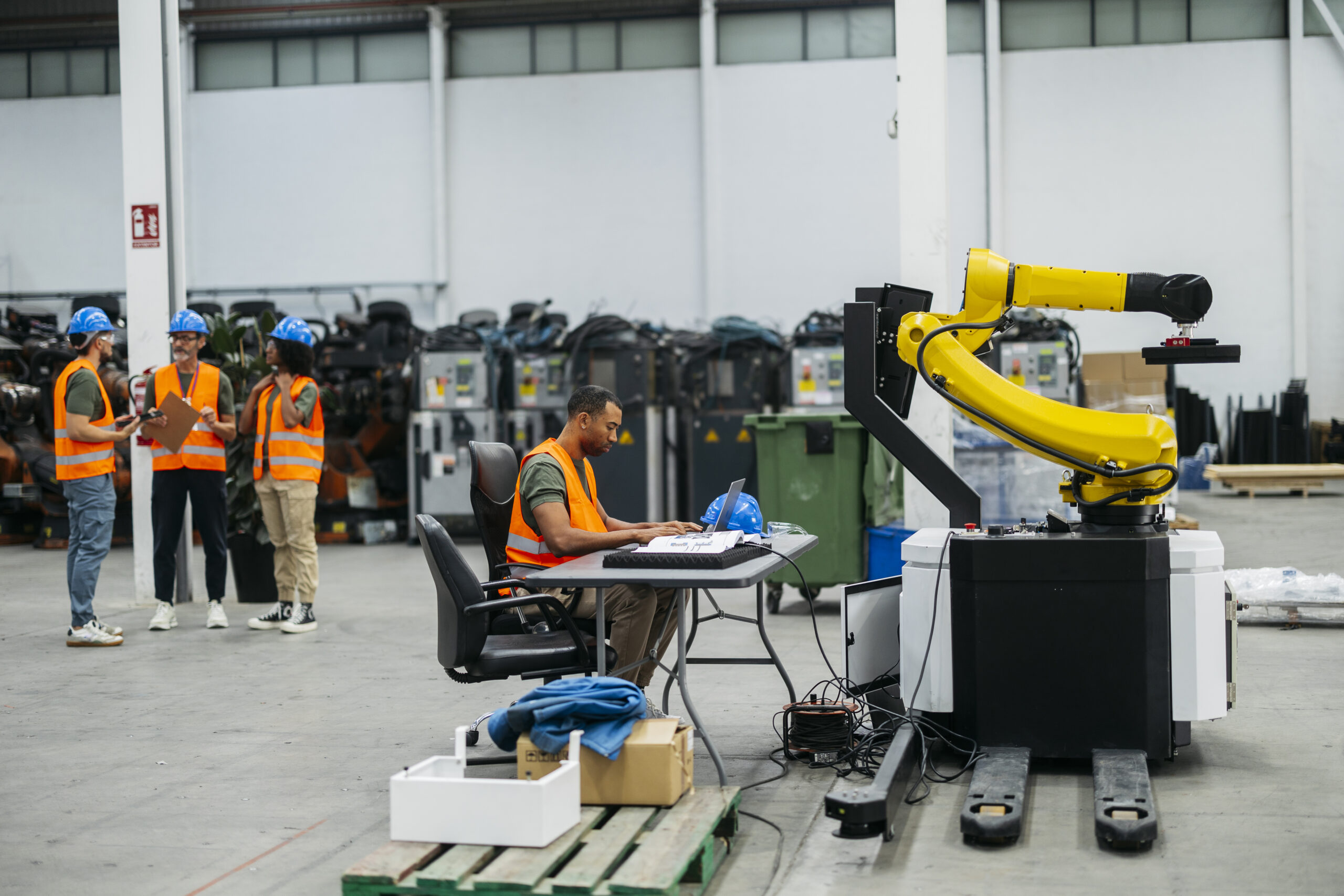
- Robotics work alongside employees, not against them.
Smart Logistics
- Algorithms calculate optimal routes, saving time and fuel.
- Warehouses deploy autonomous vehicles.
- Freight hubs adjust capacity in real time.
- AI forecasts supply chain risks.
Smart Government
- Virtual assistants answer FAQs for citizens.
- Applications are processed more quickly with automation.
- Sensors monitor infrastructure and report issues instantly.
- Data helps city planners reduce congestion.
Cooperation as the Secret Ingredient
Unlike regions that rely solely on corporate giants, the Emsland thrives on collaboration. The Digital Innovation Hub Emsland is a clear example: it hosts hackathons, workshops, and pilot projects where students, SMEs, and established businesses come together.
The guiding principle is: AI is not for the future; it is for solving today’s problems.
Start-ups: Fuelling the Engine of Change
While established companies provide stability, start-ups bring the disruptive edge. In the Emsland, new businesses are building AI-driven apps for farming, logistics optimisation tools, and smart data platforms for industrial clients.
They not only create technology but also reshape the culture of innovation. With support from the IT-Centre Lingen and regional networks, these start-ups gain access to mentors, funding opportunities, and partnerships that help them scale quickly.
Barriers for SMEs
Despite progress, obstacles remain for small and medium-sized companies:
- Limited budgets slow adoption.
- Shortage of skilled IT professionals delays projects.
- Lack of data management experience creates hesitation.
- Resistance to change hinders transformation.
Many entrepreneurs recognise AI’s potential, but struggle with practical questions: What tools to choose? How to finance them? Who can implement the solutions?
Support Structures for AI Adoption
The region has developed a multi-level system to overcome these hurdles.
Funding Programs:
- INDUSTR_I4.0 offers grants up to €50,000 for AI-related investments.
- Mittelstand-Digital provides free resources nationwide.
- Regional offices in Lingen and Meppen guide SMEs through funding applications.
Networks and Advice:
- Tech meet-ups, AI seminars, and cross-industry networks spread knowledge.
- Practical workshops simplify AI for business leaders.
Training and Skills:
- Partnerships with universities provide cutting-edge education.
- Tailored courses help companies reskill employees.
- Demonstration projects showcase AI in action.
What the Future Holds
AI’s role in the Emsland is clear:
- Addressing labour shortages through automation.
- Improving public services with faster, smarter systems.
- Boosting sustainability by cutting waste and emissions.
- Raising competitiveness by empowering SMEs.
- Attracting talent through a modern, digital economy.
Here, AI is not about replacing people. It is about enabling them to work smarter and focus on meaningful tasks.
Linvelo: A Regional Innovator with a Global Outlook
Among the companies shaping this landscape is Linvelo, a digital solutions provider based in the region.
Linvelo helps businesses unlock AI potential by offering consulting, app development, and customised digital strategies. With over a decade of experience, more than 70 professionals, and a focus on sustainability, Linvelo bridges the gap between cutting-edge technology and practical needs.
“We see our mission as making technology both efficient and accessible. It should improve daily life rather than complicate it.”
— Oleksandr Kotsyuba, CEO of Linvelo
Linvelo demonstrates how a regional company can act as a global innovator.
Conclusion: Emsland’s Lesson
The story of the Emsland challenges the notion that innovation requires skyscrapers and venture capital. Here, amid fields and factories, AI is no longer a futuristic idea but a working reality.
By combining collaboration, funding, training, and cultural openness, Emsland has positioned itself as a living laboratory for artificial intelligence. Other rural regions in Europe and beyond can learn from its model.
Frequently Asked Questions
How is Emsland becoming a hub for AI?
By connecting industry, agriculture, logistics, and administration with strong networks and funding support.
What industries use AI in the region?
Agriculture, manufacturing, logistics, and government services.
What challenges do SMEs face with AI adoption?
Budget constraints, lack of expertise, workforce shortages, and resistance to change.
How are these challenges addressed?
Through funding programs, innovation hubs, training partnerships, and consulting.
What benefits will AI bring to Emsland in the future?
It will improve efficiency, sustainability, talent retention, and competitiveness across sectors.